|
|
Dr. Jiye Fang's Nano Research Group |


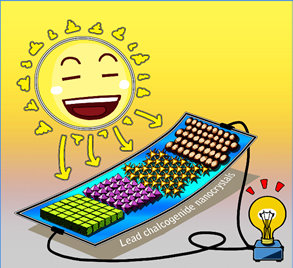
Superlattices represent a unique class of materials with periodically ordered structures that can exhibit a wide range of functional properties, including dielectric, optical, magneto-optical, electrical, mechanical, and gas-sensing characteristics. In the field of nanoscale self-assembly, the formation of superlattices from nanocrystal building blocks has been extensively studied both experimentally and theoretically over the past several decades.
Supercrystals are ordered assemblies of nanocrystals arranged in two- or three-dimensional arrays, forming superlattices with periodicity defined by the spatial arrangement and chemical composition of the nanoscale building blocks. These structures are typically produced by assembling high-quality nanocrystals synthesized through wet-chemical methods.
While early studies focused primarily on spherical nanocrystals, replacing them with non-spherical nanocrystal building blocks introduces additional degrees of freedom in the assembly process. The anisotropic shapes and orientations of these nanocrystals can lead to unique packing geometries and altered packing densities compared with conventional sphere-based assemblies. As a result, the resulting superstructures may exhibit not only size- and shape-dependent properties of the individual nanocrystals but also emergent collective behaviors arising from optical, magnetic, and electronic interactions among the anisotropic building blocks.
Understanding and controlling the self-assembly of such nanocrystal superlattices can enable the rational design of materials with tailored nano-architectures for advanced applications, including next-generation electronic, optical, and quantum materials. Our research explores superlattice assemblies composed of various non-spherical nanocrystal systems, including In2O3, PbS, PbSe, PbTe, Pt3Ni, Pt3Cu2, and Pt, with the goal of understanding their assembly mechanisms, structural ordering, and resulting functional properties.
Further reading materials:
NanoToday, 5(5) 390 - 411 (2010).
Chem. Asian. J., 6(5) 1126 - 1136 (2011).
Acc. Chem. Res., 46(2) 191 - 202 (2013).
Nano Res., 8(8) 2445 - 2466 (2015).
J. Am. Chem. Soc., 136(4) 1352 - 1359 (2014).
Nano Lett., 12(8) 4409 - 4413 (2012).
J. Am. Chem. Soc., 130(22) 6983 - 6991 (2008).
J. Am. Chem. Soc., 134(34) 14043 -14049 (2012).
Nano Lett., 11(7) 2912 - 2918 (2011).
Nano Lett., 17(1) 362 - 367 (2017).
J. Am. Chem. Soc., 146(12) 8598 - 8606 (2024).
Binghamton University
· Chemistry
Department · 25 Murray Hill Road · Vestal, NY 13850
Materials on this website may only be browsed and saved for personal use.
Please do not reproduce and distribute commercially without permission from
the publisher or website owner.
 Meeting Schedule
Weekly Picks
Research Training
Shared Resources
Chemical Inventory
Presentation Archive
BU Brain
Chem Stockroom
Internal Site
MyBinghamton Group Posters Team Updates Joining our Lab
Campus Map
Campus Parking Info
Meeting Schedule
Weekly Picks
Research Training
Shared Resources
Chemical Inventory
Presentation Archive
BU Brain
Chem Stockroom
Internal Site
MyBinghamton Group Posters Team Updates Joining our Lab
Campus Map
Campus Parking Info|
|
||
 |
 |